Decoding Your Vedic Chart: A Beginner’s Guide
Your Vedic chart is not just an astrology diagram. It is more like a personal life dashboard. Imagine opening Spotify Wrapped, but instead of only seeing your music habits, you see your emotional patterns, career tendencies, relationship style, timing of opportunities, and the areas where life keeps asking you to grow. That is what your Kundli tries to do.
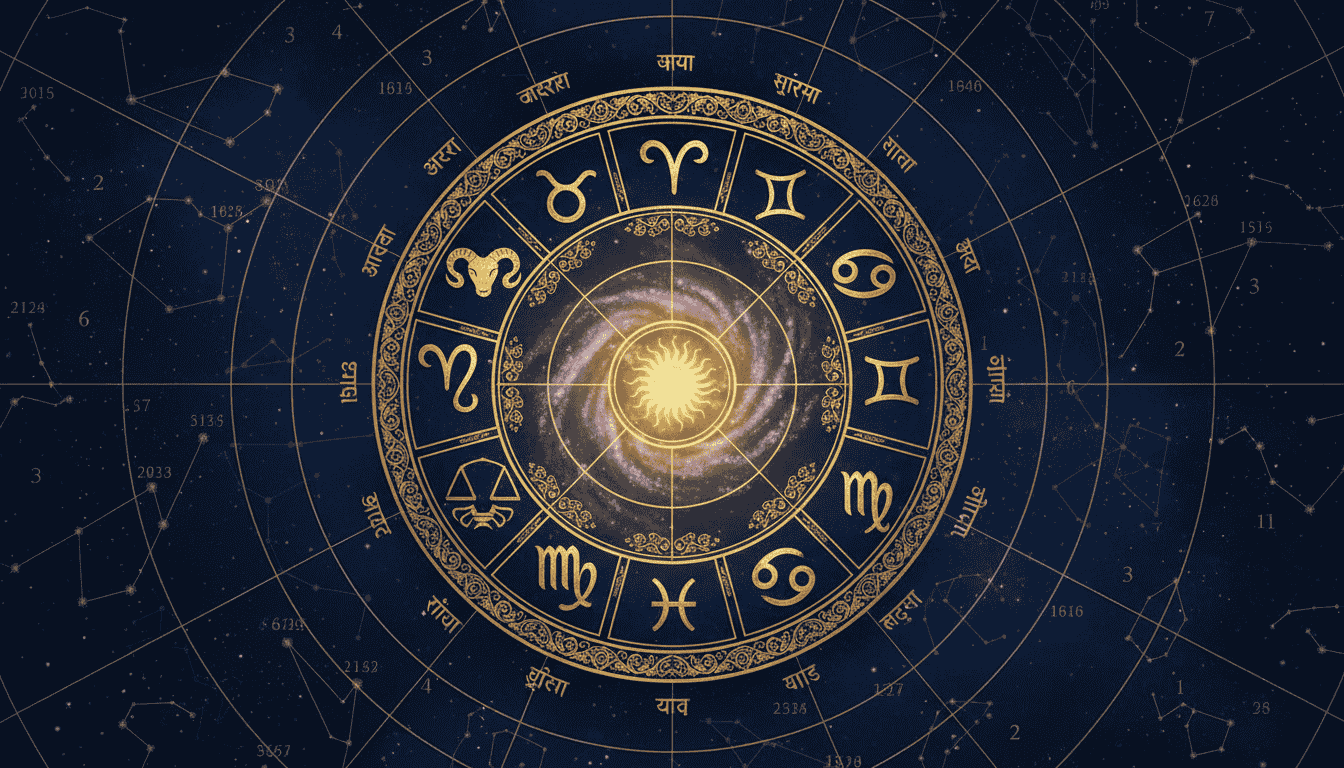
In Vedic astrology, a birth chart or Janam Kundli is created using your date, time, and place of birth. It captures the position of planets, zodiac signs, and houses at the exact moment you were born. The zodiac itself refers to the belt in the sky through which the Sun, Moon, and visible planets appear to move from Earth’s view. In astrology, those positions are interpreted to understand life patterns and tendencies.
The first thing to understand in your Kundli is your Lagna, also called the Ascendant. This is the sign rising on the eastern horizon at the time of your birth. Your Lagna sets the structure of your chart and decides how the 12 houses are arranged. In simple words, it shows how life begins for you, how you approach the world, and how people may experience your outer personality.
Next comes the Moon sign, or Chandra Rashi. If your Sun sign is like your Instagram profile, your Moon sign is your close friends story. It shows what you feel, how you react, what comforts you, and what makes you emotionally secure. This is why Vedic astrology gives the Moon so much importance, especially in emotional decisions, compatibility, mental peace, and dasha calculations.
Then come the 12 houses. Each house represents a different area of life. The 1st house is self and personality. The 2nd house is money, speech, and family values. The 3rd house is courage and communication. The 4th house is home and emotional peace. The 5th house is love, creativity, education, and children. The 6th house is work, health, competition, and daily discipline. The 7th house is marriage and partnerships. The 8th house is transformation, secrets, sudden events, and deep research. The 9th house is luck, higher learning, dharma, and fatherly guidance. The 10th house is career and public image. The 11th house is gains, network, and ambitions. The 12th house is foreign lands, sleep, spirituality, isolation, and expenses.
The planets bring energy into these houses. For example, Venus may bring beauty, love, comfort, and art. Mars may bring action, courage, conflict, and ambition. Jupiter may bring wisdom, blessings, learning, and expansion. Saturn may bring responsibility, delay, discipline, and maturity. But no planet acts the same for everyone. A planet’s result depends on its house, sign, strength, conjunctions, aspects, and dasha period.
This is where Dasha becomes important. Your Kundli tells you what exists in your chart, but dasha tells you when a particular life theme becomes active. Think of your Kundli as a full Netflix library and your dasha as the show currently playing. A person may have strong career potential, but that potential may fully activate only during a supportive planetary period. The Vimshottari Dasha system is one of the commonly used timing systems in Vedic astrology and divides life into planetary periods called Mahadasha and sub-periods called Antardasha.
A beginner should not try to decode everything in one day. Start with five things: your Lagna, Moon sign, current Mahadasha, 10th house for career, and 7th house for relationships. Once you understand these, your chart starts becoming less like a complicated Sanskrit puzzle and more like a personal story.
For GenZ, think of it like this: your Kundli is not a fixed “you will only become this” document. It is more like your operating system. It shows default settings, hidden bugs, power features, upgrade cycles, and areas where you need better user control. Astrology becomes useful when it gives self-awareness, not fear.
Your Vedic chart does not remove free will. It gives context. It tells you why certain themes repeat, why some years feel heavy, why some relationships teach you more than they give, and why certain career phases open suddenly after long delays.
The best way to read your Kundli is not with panic, but with curiosity. Ask: What is this chart trying to teach me? Where am I naturally strong? Where do I need discipline? Which life area is active right now? And how can I make better choices with this awareness?
Your Kundli is not the end of your story. It is the beginning of understanding it.